About Us
Rev. Dr Praveen Martis SJ
Vice Chancellor
Ms. Jennifer Ida Mascarenhas
Chairperson for Extension Services
Ms. K. Gopika
Centre Coordinator

Ms. Reena
Centre Coordinator
Mr. Claren
Centre Coordinator
Introduction
The Centre for Extension Services at St. Aloysius College is a dynamic Centre aimed at extending the institution's resources and energy into the broader community, fostering a culture of social responsibility, environmental consciousness, and community engagement.
Through various programs, the Centre provides transformative experiences for students, staff, and the communities it serves. The extension services facilitate holistic education, linking academic learning with real-world impact.
Vision
The Department of Extension Services envisions an education paradigm that integrates social responsibility, cultural sensitivity, and environmental awareness, shaping students into active, engaged citizens capable of driving societal transformation and addressing global challenges.
Mission
Our mission is to foster holistic, experiential learning that instills a deep sense of responsibility toward societal and environmental well-being. We aim to equip students with values and skills for meaningful community engagement, making them lifelong contributors to the common good.
Objectives
- To engage UG students in 40 hours of community service per year, fostering empathy and responsibility.
- To strengthen collaboration between the institution and local NGOs, government bodies, and community organizations.
- To promote ecological awareness and sustainable practices through student-led environmental projects.
- To enhance cultural awareness and civic responsibility through workshops, campaigns, and community activities.
- To empower PG students through hands-on engagement with social, cultural, environmental, and civic issues through a 5-day live-in experience in adopted rural and urban communities.
SAHAAYA Coordinators
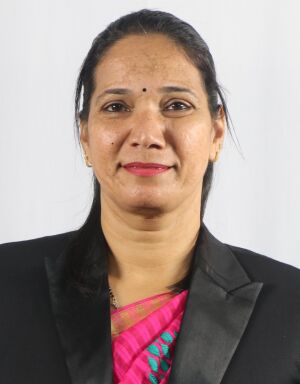
Ms. Nithisha Rodrigues
BA Programme Coordinator

Ms. Greeshma
BA Programme Coordinator

Ms. Himani BS
BCA Programme Coordinator

Ms. Carmel Benita Dmello
BCA Programme Coordinator

Ms. Valina Jenisha Dalmeida
BSc Programme Coordinator

Ms. Sherley V. Andrade
BSc Programme Coordinator

Ms. Sharol Savitha Rodrigues
BCom Programme Coordinator

Ms. Renita Aranha
BCom Programme Coordinator

Dr. Suchitra
BCom Programme Coordinator

Ms. Ann Varghese
BBA Programme Coordinator

Ms. Nainashree
BBA Programme Coordinator

Ms. Harini S
BVoc Programme Coordinator

Mr. Aaron Freidar Heri
BVoc Programme Coordinator
Introduction
SAHAAYA is an outreach initiative by St. Aloysius (Deemed to be University), Mangalore, designed to foster social responsibility and ecological sensitivity among students. The programme provides students with an opportunity to witness social realities firsthand, engage with marginalized communities, and contribute to positive social change.
Mission
Forming men and women for and with others who are socially responsible and ecologically sensitive.
Objectives
- Provide an opportunity for staff and students to witness social reality.
- Sensitize staff and students to social responsibility.
- Utilize the creativity and energy of staff and students towards social change.
- Contribute to the holistic development of students.
- Promote college–neighborhood networking.
Programme Structure & Flow

Implementation of the SAHAAYA Programme
Duration
The outreach activities under SAHAAYA are conducted over 20 hours in each of the 2nd and 3rd semesters. These hours are thoughtfully allocated as follows:
• Orientation (1 Hour):
A session to introduce the goals, expectations, and importance of the SAHAAYA program. It sets the tone for the participants' involvement by highlighting the mission and objectives.
Significance and Relevance of SAHAAYA in Today’s Context: The activities align closely with current societal and environmental challenges. For example:
• Environmental conservation efforts like beach cleaning and sapling plantations combat climate change and promote sustainability.
• Awareness campaigns on health, hygiene, and government schemes empower communities and address immediate needs.
• School interventions create a nurturing environment for holistic child development, addressing gaps in education and life skills.
These initiatives are not only necessary but also serve as stepping stones for long-term change.
* SAHAAYA Exposure Activities (7 Hours):
Practical engagement with communities through field visits, interaction with marginalized groups, environmental clean-up drives, and cultural programs for the inmates of the Institution. It provides firsthand experience of societal realities and strengthens participants' ability to connect academic knowledge with practical application.
Nature of Work and Exposure:
Participants engage in diverse activities that span social, environmental, educational, and health-related domains. These activities include:
• Recreational visits to care centers.
• Conducting awareness campaigns on issues like waste management, mental health, and traffic control through interactive methods such as street plays and flash mobs.
• Interventions in schools through remedial classes, life skills training, and cultural programs.
• Participation in medical camps and environmental conservation efforts, such as sapling plantations, beach cleaning, and rainwater harvesting.
• Involvement in right-based activities, community rallies, and campaigns.
• Assisting with construction projects for marginalized families and documenting social issues through radio and video programs.
* SAHAAYA Intellectual Activities (7 Hours):
Includes seminars, workshops, discussions, and research activities related to social, environmental, cultural, and civic concerns. It enhances theoretical understanding of societal and environmental issues and it encourages innovative solutions to real-world challenges.
The SAHAAYA Intellectual Activity is designed to foster critical thinking, social awareness, and problem-solving skills among students. It encourages them to engage deeply with societal issues, analyze challenges, and prepare for their role as agents of change and innovation.
* Reflection (2 Hours):
Reflection is carried out by the Mentor, one hour after the Sahaaya exposure activity and one hour after the Sahaaya Intellectual Activity.
This encourages deeper understanding, self-awareness, and empathy for societal challenges. The reflection process in SAHAAYA serves as an integral part of its outreach initiative, encouraging participants to critically evaluate their involvement, experiences, and the impact of their contributions.
* Mentoring (3 Hours):
Guided by the philosophy that “mentoring should be a fulfilling relationship...with the goal of helping both individuals become elevated versions of themselves” (Janice Omadeke), this component fosters a meaningful connection between experienced mentors (the faculties) and students.
Each of the Mentor will be given to 12 - 15 students to accompany and guide. It provides personalized guidance and support and it helps Students reflect on their experiences and develop critical thinking.
SAHAAYA Mentors
Fifteen Students are grouped under one Mentor, who is their own course teacher. She will guide and follow their growth and progress in Sahaaya activities.
Impact of SAHAAYA
On Students and Staff:
1. Develops empathy and a deeper understanding of societal challenges.
2. Encourages critical thinking and problem-solving skills.
3. Promotes teamwork, leadership, and interpersonal growth.
On Communities:
1. Provides access to resources, knowledge, and support.
2. Empowers marginalized groups through active engagement and advocacy.
3. Strengthens the social fabric through collaboration and mutual understanding.
About
The Centre for Cultural Concern was established on 15 th March, 2021 as an outreach Centre of St. Aloysius College, Autonomous- Mangaluru. This is a lively group of students working along with their mentors with the constant goal of reaching out to serve the society. Activity conducted by the concern always encourages students to consider the societal needs. Students who participate in the events organized by the concern gain empathy for the under privileged. Concern provides students with a platform to showcase their leadership abilities through cultural events, which are essential for community development. Currently, students provide awareness program on social and economic issues through street plays and acts, also plan out strategies to create opportunities for education of underprivileged.
Vision
To provide an opportunity for students to work in a group towards creating awareness on socio-economic issues.
Mission
- Creating awareness on importance of education particularly to marginalized group.
- Promoting social values among students by making them aware about social issues.
- Develop leadership skill by organizing knowledge enhancement activities to marginalized groups.
- Connecting students with underprivileged through visit to orphanages, old age homes, slums, rehabilitation Centres.
Activities conducted by Centre for Cultural Concern (CCC 1)
Centre for Cultural Concern Report
About
The Centre for Environmental Concern was established on March 15, 2021 as an outreach centre of St Aloysius College (Autonomous) Mangaluru. It is actively engaged in working for the Green campus. It is a concept to build sustainable living practices that are environmental- friendly among staff and students of the college. Each activity organized by the Centre aims at creating environmental consciousness that inculcates values in students and staff. At present the Centre is actively involved in training students to realise the significance of waste segregation and it's management.The Centre for Environmental Concern organizes an innovative student outreach programme SAHAAYA for Under Graduate Students of the college.
Vision
To sensitize staff, students and general public towards preserving and conserving nature for sustainable development.
Mission
To undertake activities to promote environmental consciousness through:
- Waste segregation and management
- Awareness and understanding of the current climate crisis
- Awareness on preserving natural resources
- Practice of sustainable lifestyle for a better future
Initiatives of Centre for Environmental Concern
Centre for Environmental Concern
A. Volunteer Group of Centre for Environment Concern: Eco warriors
Eco Warriors was established in the year 2021
The Eco Warriors are a student-driven environmental group under the Centre for Environmental Concern. They serve as active agents of change within the campus and beyond, championing green practices and raising ecological awareness through hands-on initiatives, campaigns, and peer engagement.
Vision
To build a proactive student community dedicated to environmental protection and sustainable living.
Mission
To lead by example through green initiatives, drive student involvement in environmental causes, and foster an eco-conscious mindset that extends from the classroom to the community.
Activities
Centre for Environment Concern Report
Vision
To inculcate civic consciousness among the students and to form the youth as Nation Builders.
Mission
- To empower students to be pillars of a strong Nation
- To create awareness among students regarding the concerns of the Society and to sensitize them to its needs through involving them into Civil Society and its affairs
- To practice National Integration and work towards Social Harmony
- To create a Human Resource of organized, trained and motivated youth to provide leadership in all walks of life and be always available for the service of the Nation.
- To take up the urgent challenges hampering the secure Natural Environment.
Objective
- To identify the needs and problems of the Society and to involve them in problem solving and thereby gain skills leading to Character Formation.
- To inculcate the habit of Brotherhood and oneness among the Vulnerable
- To develop Social Consciousness and Social Awareness to stand up for the cause of the Society.
- To spread awareness about the Basic Rights that individual should possess.
- To promote a Humane Society based on Equality and Freedom.
Activities conducted by Centre for Civic Concern (CCC 2)
Centre for Civic Concern Report
About
St Aloysius Deemed to be University is committed to form the Postgraduate students as “Men and women for and with others”, who are socially responsible, so that they become powerful force in the transformation of society. In this regard, every Postgraduate student of this University, is expected to have a living experience in the marked villages for five days.
The Rural Immersion programme as mandatory programme, began in the year 2001, for the students of MSW. In the following years, all the other post graduate courses started implementing it. The villages assigned to the students are from Mundgod and Hangal, of North Karnataka, and Kavallapaduru, Pilatha Bettu, Gurupura, Kaikamba and Someshwara from South Karnataka
5 days, live-in experience in the villages of North Karnataka, Mundgod and Hangal
Objectives
Providing a living experience of rural people in general and the Dalit/tribal life, in particular.
Making students to understand the rural social system and community living.
To be aware of the rural social problems and approaches adopted to solve them
To experience the rich culture of rural India.
To exchange knowledge and skills between rural people and college students.
Rural exposure Programme is planned with the objectives of:
- Providing a living experience of rural people in general and the Dalit/tribal life, in particular
- Making students to understand the rural social system and community living
- To be aware of the rural social problems and approaches adopted to solve them
- To experience the rich culture of rural India
- To exchange knowledge and skills between rural people and college students
Components: Entire 5 days consists of 1) Orientation 2) Five days Living experience and interaction with the villagers 3) Mutual Learning: exchange of experiences, knowledge and skills with the villagers 4) Evaluation (Analysis) and 5) Documentation.
Activities undertaken by the students in the villages are:
Activities
The Rural Immersion Programme activities vary
- Immersive student experiences in adopted villages, involving fieldwork in areas such as education, sanitation, and agriculture.
- Collaboration with village panchayats to formulate sustainable development plans for water conservation, farming, and rural education.
- Conducting health camps, workshops on income-generation activities, and infrastructural improvements in villages.

About
The Centre for Social Concern was established in 2008 as an outreach centre of St Aloysius College (Autonomous) Mangaluru. It is an active association that works for the marginalized addressing their need and bringing about social awareness among students and staff of the college. Each activity organized by the Centre aims at creating social consciousness to inculcate social values in students and staff. At present the Centre extends its services to ten villages that comes under five Panchayaths and wards of the Mangalore City Corporation.
The Centre for Social Concern organizes an innovative students outreach programme SAHAAYA for Under Graduate Students of the college. This programme demonstrates the crux of Jesuit Education with its emphasis on Context-Experience-Reflection-Action- Evaluation. The Centre has built a strong college neighborhood network and students are able to establish contact with their immediate environment and find a link between education and community service.
Vision
To develop a sense of social responsibility among the students to create a humane society with compassion and commitment.
Mission
To reach out to the neediest of the society and provide them support by:
Initiatives of Centre for Social Concern
Activities conducted by Centre for Social Concern (CSC)
Centre for Social Concern Report
A. Volunteer Group of Centre for Social Concern: “We Care”
WE CARE Volunteer Group was established in the year 2021
Vision
To create a compassionate and inclusive community where every individual, regardless of their circumstances, feels supported, valued, and empowered to overcome challenges.
Mission
To reach out to those in need, offering assistance, support, and resources through the dedication and networking of student volunteers, with the goal of enhancing the well-being and sense of belonging of every individual within our community.
Objectives
To identify and assist underprivileged individuals, including students and staff, by addressing their immediate needs and offering long-term support.
To create an environment of inclusivity and belonging, where every member of the community feels connected, supported, and valued.
To encourage personal growth and social responsibility among volunteers by engaging them in meaningful activities that make a positive impact on the lives of others.
To connect individuals in need with relevant resources, services, and opportunities that can help improve their circumstances and well-being.
To organize events, workshops, and outreach programs that not only address the immediate needs of the underprivileged but also contribute to their overall development and well-being.
To establish a robust network of volunteers, partners, and supporters who are committed to making a positive difference in the lives of those in need.
To inspire a culture of volunteerism and encourage students to contribute their time and skills to social causes, thereby fostering a sense of responsibility towards the community.
To maintain the highest standards of confidentiality, respect, and ethical conduct in all interactions and activities involving the individuals and communities we serve.
By adhering to these principles, WE CARE aims to be a beacon of hope and support within the community, dedicated to uplifting the lives of those who need it most.
Activities
WE CARE Report
UBA Project - Unnat Bharat Abhiyan
The Ministry of Human Resource Development (MHRD) has launched a programme called ‘Unnat Bharat Abhiyan’ with an aim to connect institutions of higher education, including Indian Institutes of Technology (IITs), National Institutes of Technology (NITs) and Indian Institutes of Science Education & Research (IISERs) etc. with local communities to address the development challenges through appropriate technologies. Unnat Bharat Abhiyan is inspired by the vision of transformational change in rural development processes by leveraging knowledge institutions to help build the architecture of an Inclusive India.
Presently around 70% of the population in India lives in rural areas engaged in agricultural sector. Rural areas also facing the problems such as inequity in health, education and basic amenities and so on. In order to move towards the holistic development of the villages the concept of Unnat Bharat Abhiyan started with the initiative of a group of dedicated faculty members of Indian Institute of Technology Delhi. Unnat Bharat Abhiyan has been conceived to explore the potential of higher educational institutions to enrich rural area.
St Aloysius University Mangaluru is also an institution, prepares the students to enrich the rural areas through their knowledge. Our institution has adopted 5 rural communities to assess the local and needs and also to work with the group of community people.
Kavalapadur Panchayath, Pilathabettu Panchayath, Muluru Panchayath, and Kandavara Panchayath are the rural communities adopted by the institution.
Programmes / Other Initiatives conducted by CSC and CEC in adopted villages
Programmes Report