Overview
About the Programme
The Department of Artificial Intelligence & Machine Learning focuses on building future-ready professionals skilled in intelligent systems, data-driven decision-making, and innovation. The department integrates strong mathematical foundations with hands-on learning in AI, ML, and deep learning to address real-world challenges responsibly.
Vision
To be a leading centre for education and research in Artificial Intelligence and Machine Learning with a focus on ethical and responsible innovation.
Mission
- To impart strong foundations in AI, ML, and data science principles.
- To enable the development of intelligent and data-driven solutions for complex problems.
- To promote ethical, responsible, and socially relevant AI practices.
Programme Core Courses
- Data Structures and Algorithms (Theory)
- Data Structures and Algorithms Lab
- Web Programming (Theory and Lab)
- Design and Analysis of Algorithms (Theory)
- Design and Analysis of Algorithms Lab
- Computer Architecture and Organization (Theory)
- Software Engineering (Theory)
- Software Engineering Lab
- Database Systems (Theory)
- Database Systems Lab
- Operating Systems (Theory)
- Operating Systems Lab
- Theory of Computation (Theory)
- Embedded Systems (Theory)
- Artificial Intelligence (Theory)
- Compiler Design (Theory)
- Compiler Design Lab
- Computer Networks (Theory)
- Computer Networks Lab
- Cryptography and Network Security (Theory)
- Cryptography and Network Security Lab
Programme Elective Courses
- Machine Learning (Theory)
- Machine Learning Lab
- Deep Learning (Theory)
- Deep Learning Lab
- Game Programming (Theory)
- Game Programming Lab
- Machine Vision (Theory)
- Machine Vision Lab
- Explainable Artificial Intelligence (Theory)
- Speech and Language Processing (Theory)
- Speech and Language Processing Lab
- Cognitive Robotics (Theory)
- Cognitive Robotics Lab
- Autonomous Drones (Theory)
- Autonomous Drones Lab
Infrastructure
| Lab | Hardware Details | Software / Tools |
|---|---|---|
| Computer Programming Lab | Dell OptiPlex 3020, Intel i5, 3.20 GHz, 500 GB HDD, 8 GB RAM | Keil, Altera Quartus II, Visual Studio .NET, MATLAB 2015a |
| Software Systems Lab | Intel i5, 3.20 GHz, 500 GB HDD, 8 GB RAM | C, C++, Java, Oracle 11g, MySQL, Rational Rose, Cisco Packet Tracer |
| Intel Multicore Lab | Intel Core 2 Quad / i5-7500, 4–8 GB RAM | Visual Studio .NET |
| Artificial Intelligence Lab | Intel i9-9900K, NVIDIA Quadro RTX 5000, 32 GB RAM | OpenCV, Python, MongoDB, Cassandra, Neo4j |
| Cloud Computing Lab | Dell 3020, Intel i5, 8 GB RAM | Eclipse, NetBeans, Anaconda, MySQL, MATLAB |
| Database Systems Lab | Intel i5, 8 GB RAM | Python, R, MATLAB, Oracle, MySQL, Wireshark, NS3 |
Scope of Employment
The B.Tech. programme in Artificial Intelligence and Machine Learning is aligned with the rapidly growing demand for skilled professionals in intelligent systems and data-driven technologies. Graduates find opportunities across industries such as healthcare, finance, fintech, manufacturing, automation, and emerging AI-driven domains.
Faculty
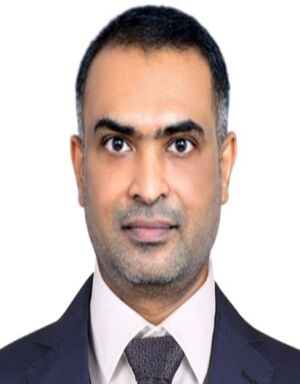

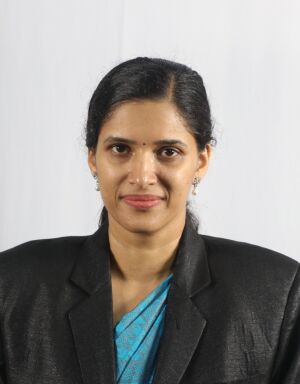

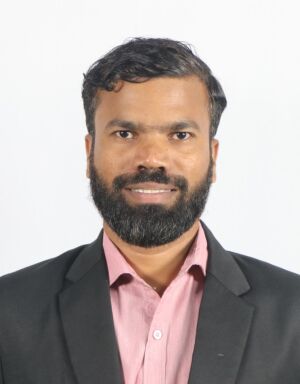


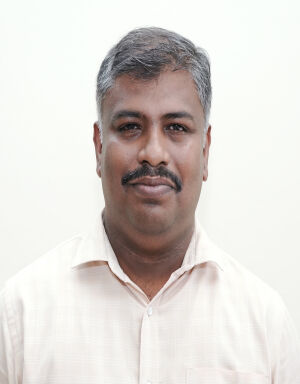




Seminar-Conferences
Guest-Lectures



Faculty-Development-Programme
Student-Extension-Activities
Institutional-Visit
Fests
Resoenance 2025: A National level Techno-cultural fest
The School of Engineering (SOE), St Aloysius (Deemed to be University) hosted the inaugural edition of Resoenance 2025, a national-level intercollegiate technical fest and science exhibition that celebrated innovation, creativity, and scientific inquiry. The event witnessed participation from over 150 students representing institutions across Karnataka and Kerala.
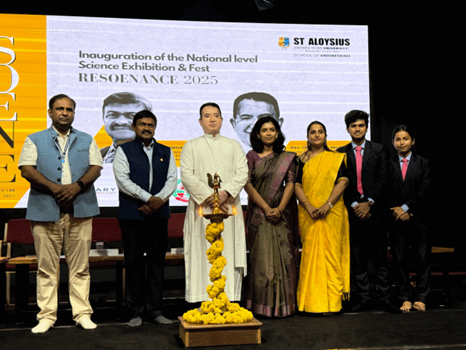
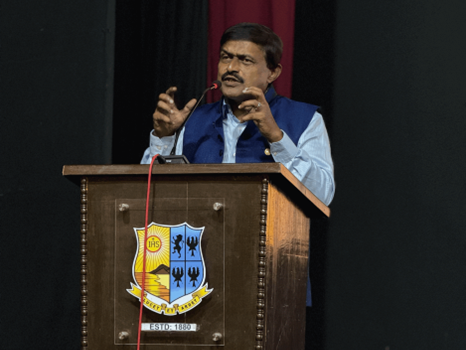

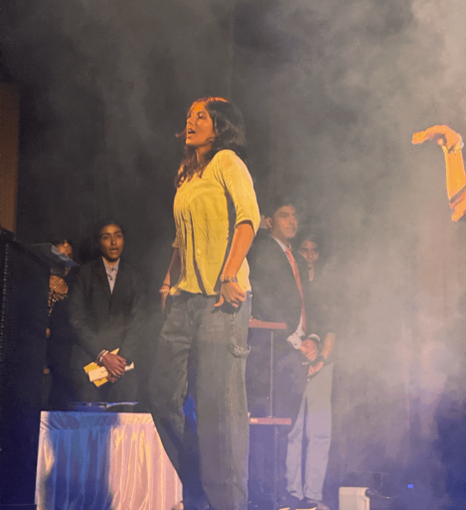
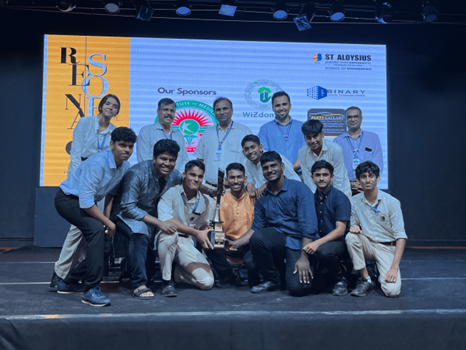
The inaugural ceremony was presided over by Dr Praveen Martis SJ, Vice-Chancellor, with Rajendra Kalbavi Rao, Executive Director, Dakshina Kannada Nirmiti Kendra, as the Chief Guest. The ceremony marked the formal commencement of the fest with the unveiling of the championship trophies.
A diverse range of competitions were conducted across venues, including IdeaJam (Ideathon), BrainWave (Quiz), Trashformers (Wealth out of Waste), ReelGear (Reel Making), Ctrl+Alt+Esc (Escape Room), KartKraft (Build-a-Car), and Encore (Variety Event), showcasing the creativity, technical skills, and collaborative spirit of the participants.
The valedictory ceremony was presided over by Dr Ronald Nazareth, Registrar, where winners were felicitated, and St Aloysius PU College was declared the overall champion of Resoenance 2025.
Resoenance 2025 reflected the School of Engineering’s commitment to fostering innovation, collaboration, and experiential learning among students.
Engineers Day: Intra-School Techno Cultural Fest
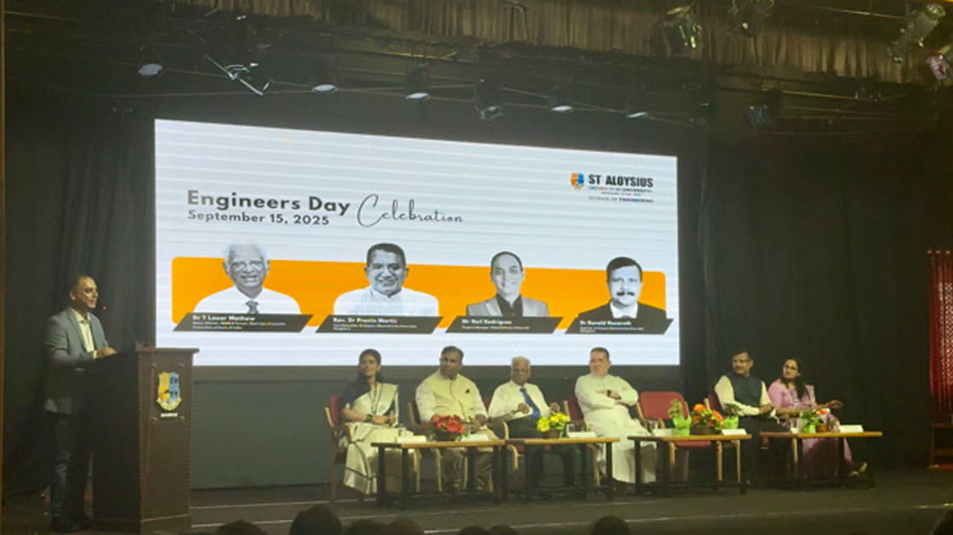
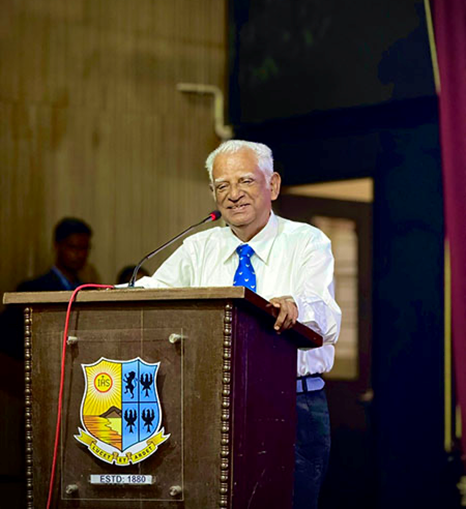
The School of Engineering (SOE) celebrated its first Engineers’ Day, commemorating the legacy of Bharat Ratna Sir M. Visvesvaraya, with a series of academic and cultural activities. The programme was presided over by Dr Praveen Martis SJ, Vice-Chancellor, with Dr T. Lazar Mathew, former Chairman of Scientific Committees, Government of India, as the Chief Guest. Neil Rodrigues, Programme Manager – Global Delivery, Infosys Ltd, and Dr Ronald Nazareth, Registrar of the University, were the Guests of Honour. Also present were Dr S. Ruban, Dean – School of Engineering, and the event coordinators Dr Geetha Pinto and Aarathi.
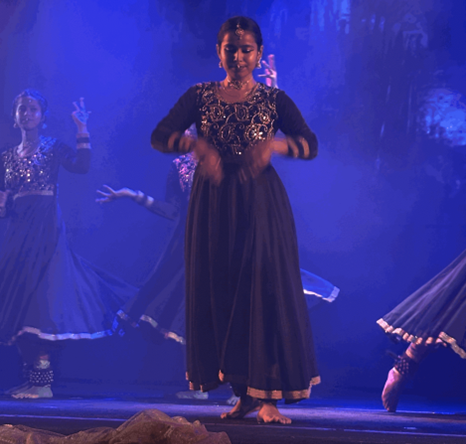
The celebration began with a prayer service and a thematic dance portraying the life and contributions of Sir M. Visvesvaraya. Addressing the students, the dignitaries highlighted the importance of adaptability, interdisciplinary thinking, ethical leadership, and innovation. Emphasis was laid on embracing emerging technologies such as Artificial Intelligence and aligning engineering education with societal needs, inspired by the Jesuit ideal of service.
Following the inaugural session, Dr T. Lazar Mathew delivered a special talk on Innovations That Changed India, encouraging students and faculty to focus on grassroots innovations and product-oriented research.
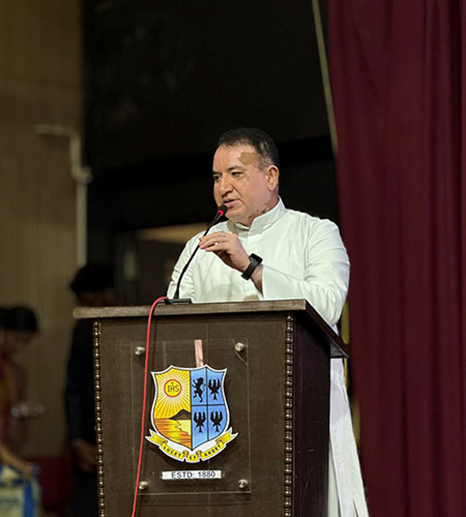
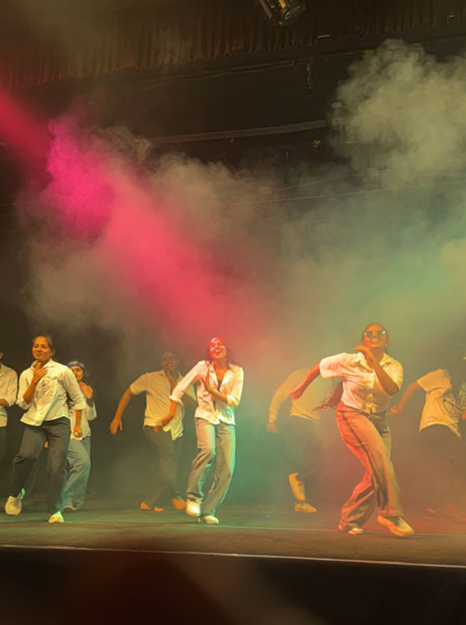
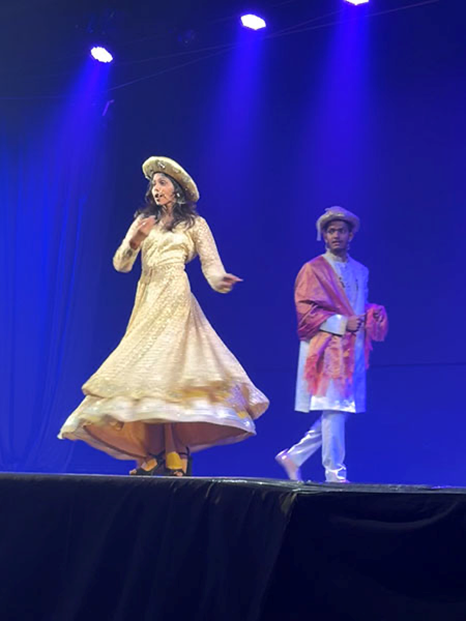
The celebrations continued with student-centric competitions including an Ideathon, Internal Smart India Hackathon, and Quizttica, and concluded with a vibrant cultural programme showcasing the talent and creativity of SOE students.
Career Opportunities
Career paths include AI/ML Engineer, Data Scientist, Deep Learning Engineer, Computer Vision Engineer, NLP Engineer, AI Researcher, and MLOps Engineer. Graduates find opportunities in autonomous systems, healthcare AI, fintech, smart manufacturing, research labs, startups, and advanced academic research.
Student Corner
Competitions
Staff Corner